

Game Animals
Non-game Animals
Habitat
White-tailed Deer
Odocoileus virginianus
- Most popular and plentiful game animal in the U.S.
- Can inhabit a variety of habitats
- Overpopulation damages forest regeneration and agricultural crops and increases deer-vehicle collisions
Species Description: White-tailed Deer
White-tailed deer are highly adaptable species and thrive in a variety of habitats. The areas that provide the most suitable environment include a mixture of hardwoods, croplands, brushlands and pasturelands. They prefer an interspersed habitat including meadows, forested woodlots, brushy areas and croplands.
White-tailed deer require a variety of foods for growth and reproduction. During the spring through fall, they feed on grasses, legumes, weeds, fruit, agricultural crops and the tender growth of shrubs, trees and vines. Their diet subsists of acorns, green growth, woody plant stems and evergreen leaves during the fall and winter. Their food sources need to be less than 4 ½ feet from the ground.
Deer have few natural predators and are managed primarily through hunting. As their population in certain areas increases, so does disease and parasites that can ultimately cause widespread die-offs. There are a number of land management techniques for controlling deer habitat including prescribed burning, timber thinning and food plantings.
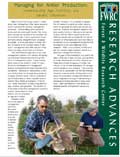
Managing for Antler Production: Understanding Age, Nutrition, and Genetic Influences (PDF)
MSU Forest and Wildlife Research Center
This publication discusses the three most important factors that influence the size of a buck's antlers: the age of the buck, the amount of nutritional food that is available for the deer, and genetics. It provides management suggestions for landowners seeking to increase antler size on their property including keeping bucks alive until they are older and planting nutritional forages for the deer.
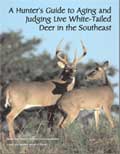
A Hunter's Guide to Aging and Judging Live White-tailed Deer in the Southeast (PDF)
Mississippi State University Extension Service, Forest and Wildlife Research Center
Due to overharvesting of bucks and under harvesting does, the sex and age ratio of deer is unbalanced across the Southeast. Managers who want to correct this situation on their land must be able to identify sex and age classes of deer. This publication provides physical descriptions and photos of the different age classes of bucks and between male and female deer.
Using Antler Restrictions to Manage for Older-Aged Bucks (PDF)
Mississippi State University Extension Service, Forest and Wildlife Research Center
Antler restrictions are commonly used to increase buck age structure by targeting only bucks with antlers that meet certain criteria. This publication discusses what antler restrictions are and how to utilize them to improve buck age structure on your property.
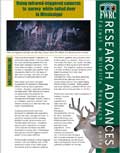
Using Infrared-triggered Cameras to Survey White-tailed Deer in Mississippi (PDF)
Mississippi State University Extension Service, Forest and Wildlife Research Center
An infrared triggered camera sends out a beam that is sensitive to movement and body heat to a receiver. When the beam is disrupted the camera takes a photo. This publication discusses how infrared triggered cameras are used to survey animal populations and the results of the surveys that have been taken.
Pine Forestland Habitat Management for Wildlife (PDF)
Mississippi State Forest and Wildlife Research Center
Pine forests can be managed to provide wildlife habitat using a variety of techniques, some of which can improve timber stand quality. Established stands can be managed with thinning, prescribed fire or disking, and even herbicide control of hardwoods which can provide food and cover for quail and grassland species, deer, rabbits, turkey and other wildlife. Regenerating stands can be managed to provide weeds, legumes, and grasses that benefit quail and other early successional wildlife species. Even former agricultural fields can be managed for grassland habitat in conjunction with pine production to include wildlife habitat.
Supplemental Wildlife Food Planting Manual for the Southeast (PDF)
Mississippi State University Extension Service
This guide provides information on food plots and habitat management practices including disking, mowing and prescribed burning. The importance of openings is also discussed. A combination of supplemental forages in food planting is often necessary, as well as testing soil quality, fertilizing and liming. The location, size and shape of food plots as well as how to prepare them and which plants to use is included. An extensive guide on planting materials is given.
Deer Management Assistance Program (DMAP)
Mississippi Department of Wildlife, Fisheries and Parks
The Deer Management Assistance Program, (DMAP) is a comprehensive deer management program, consisting of data collection and cooperator education with which the MDWFP tries to put the landowner/cooperator in a better position to manage their lands for a healthy deer herd, while maintaining habitat integrity. Read this brochure for detailed information.
Wildlife Forage Areas for White-tailed Deer (PDF)
Texas A&M University System, Texas Agricultural Extension Service
Many land managers choose to provide introduced forages during times when native plants may be absent or low in nutritive value .A wildlife forage area (WFA) may contribute to the overall quality of the managed herd, or can be a costly educational experience if sound agronomic procedures are not implemented. This publication discusses the establishment and management of WFA crops suitable for white-tailed deer.
Supplemental Forage Management for East Texas White-tailed Deer (PDF)
Texas A&M University
Supplemental food plots should be used to improve the nutrition of deer and add critical minerals to the diet of a deer herd. This publication discusses the ecological regions of East Texas, how to plan, select a site, and select species for a food plot. It also covers the size and shape of food plots.