

Game Animals
Non-game Animals
Habitat
Backyard Habitat
- Must include food, water, and cover
- Diverse vegetation is best to attract a variety of wildlife
- Avoid using pesticides and herbicides
- Can attract birds, amphibians, reptiles, butterflies, and small mammals
Habitat Description: Backyard Forests
Natural habitats for wildlife are rapidly decreasing due to urbanization and agricultural pressures. Residential areas, such as backyards, can play an important role in conserving wildlife. Homeowners can enhance the natural features in their yards and neighborhoods to create thriving wildlife habitats.
To attract wildlife, homeowners must provide food, water and cover. Natural vegetation such as native trees, shrubs, grasses and flowering plants that provide seeds, nuts, nectar and fruit serve as food sources. Water can be provided in a birdbath, dripper or small pond. Wildlife requires nesting and shelter areas to survive. A diversity of native trees, vines, shrubs and herbaceous plants, grasses and ground covers all make ideal shelter areas. Providing these essentials will attract wildlife such as birds, butterflies, small mammals, reptiles, and amphibians.
Inclement weather and predators such as domestic cats, coyotes, fox, hawks and owls can threaten backyard wildlife. Common yard chemicals can also be dangerous to wildlife. Homeowners can use alternatives to heavy chemicals such as mulch, composted leaves and organic matter to provide nutrients to plants and also maintain wildlife.
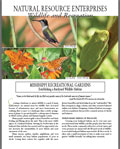
Mississippi Recreational Gardens: Establishing a Backyard Wildlife Habitat (PDF)
Mississippi State University Extension Service, Natural Resource Enterprises Program
All wildlife requires food, water and shelter to survive. This publication discusses providing those necessities in a backyard environment. Detailed information is given on how to attract birds, hummingbirds, butterflies, bats, snakes, lizards, toads and frogs. Information is also provided on controlling deer, rodents, and other animals that are considered pests. Management tips are given for making your backyard the best habitat possible including an example and how to create a trail.
Butterfly Plants and Mississippi Butterflies (PDF)
Mississippi State University Extension Service
Butterfly gardens must have two types of plants: host plans for larvae and nectar plants for adults. This paper presents a list of the common butterflies of Mississippi, host plants, and nectar plants to put in your garden.
Helping Birds at Home - Improving Bird Habitat in Your Yard (PDF)
PRBO Conservation Science
Songbird populations have dwindles due to loss of habitat and the spread of exotic non-native species. Improving bird habitat in your yard can help provide valuable breeding habitat and food for resident and migratory birds. Using native plants to create structural diversity that mimic natural formations provides nesting sites. Making your yard less attractive to songbird predators is another important step. Taking care when you mow to leave no-mow areas and native tree saplings and shrubs help ground-nesting birds.
Landscaping to Create Backyard Bird Habitat (PDF)
Rutgers NJAES Cooperative Extension
Making sure your backyard includes the basic needs of wildlife can create backyard habitat for birds. Food, water, cover, and space are important. Steps to landscape your backyard for bird habitat are outlined. A description of the types of plants to consider when creating bird habitat is provided as well as a table of different species and their growing conditions and uses by wildlife.
Putting a Little Wildlife in Your Backyard This Spring (PDF)
Purdue University Forestry and Natural Resources
Spring is a time when we begin to plan what we will be planting in our yards and gardens. This year, plan ahead and provide the basic needs for backyard wildlife. The types of plants, shrubs, and trees you select and where you plant them will determine which species you will attract. This publication discusses the plants that provide food, cover, attract insects, as well as the need to provide a water source.
Attracting Wildlife: Sources of Assistance (PDF)
Pennsylvania State University
This publication provides a listing of recommended books for further information on landscaping for wildlife, feeding birds, bird and mammal houses, as well as a listing of agencies and organizations with additional information.
Backyard Conservation: Wildlife Habitat (PDF)
Natural Resources Conservation Service
Making a home for birds, butterflies, and other wildlife includes providing habitat - food, water, shelter, and space - in an arrangement that meets the needs of wildlife. This publication goes through the steps for planning your wildlife habitat, creating the habitat, and providing water. It also specifically discusses ways to attract bats, reptiles and amphibians, mammals, birds, bees, and butterflies to your yard.
Habitat at Home (PDF)
Virginia Habitat Partners
When planning backyard wildlife habitat, you need to consider the "recipe" for habitat, which is different for each wildlife species. By increasing the diversity of plants and structure, you can attract a variety of wildlife. Your gardening style may need to be adapted for wildlife to ensure your provide adequate year-round food, cover, and water. This guide take you through the decision-making process, provides suggestions, and discusses plants to use.